TEXAS
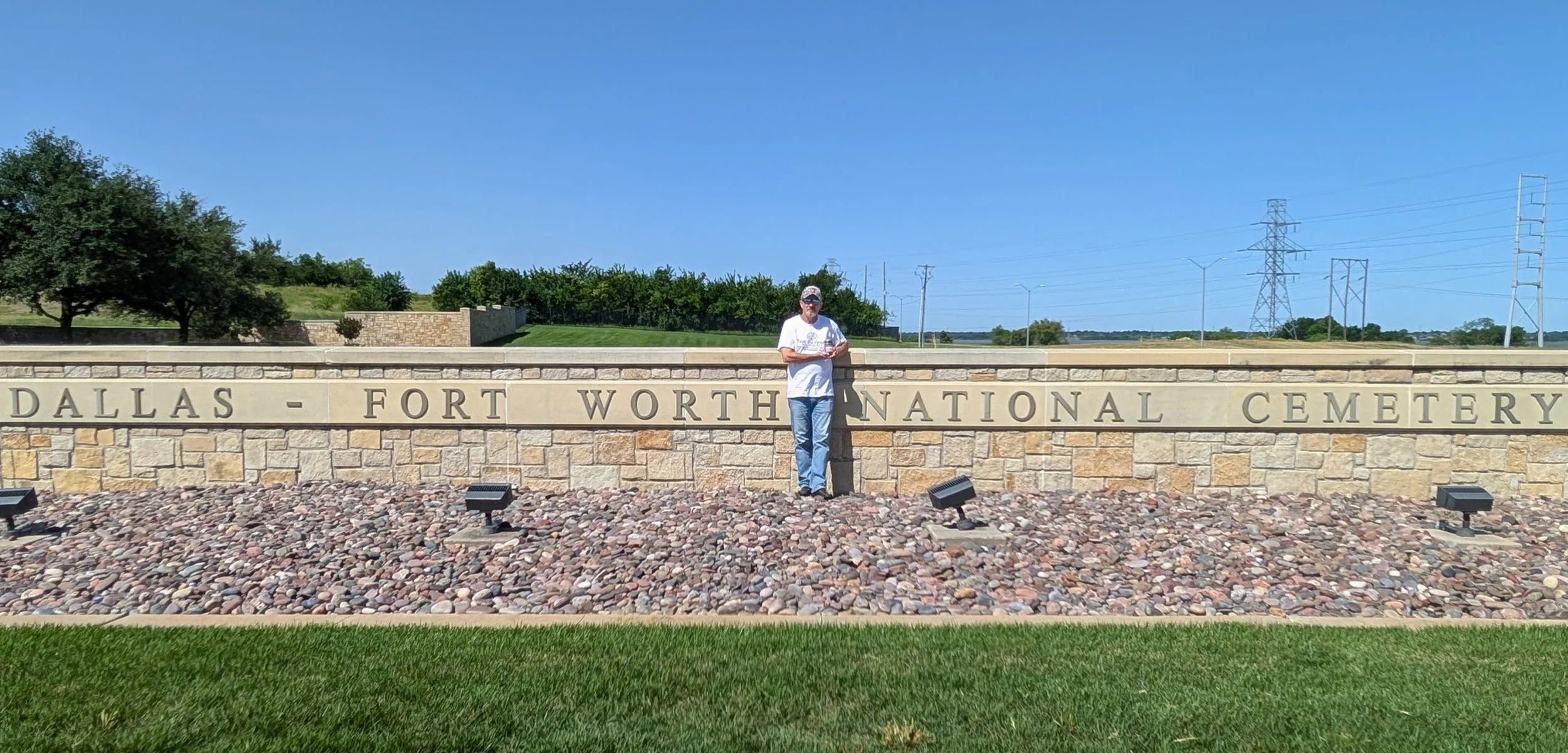
Dallas-Fort Worth National Cemetery
The Dallas–Fort Worth National Cemetery is one of the largest and most significant national cemeteries in the United States, serving as a long-term resting place for veterans, active-duty service members, and eligible family members across North Texas and beyond. Established in 2000 and spanning roughly 600+ acres in southwest Dallas, it was created to meet the growing need for military burial space in one of the nation’s largest veteran populations.
Set on gently rolling land overlooking Mountain Creek Lake, the cemetery has a deliberately designed landscape that feels more like a national memorial park than a traditional graveyard. Wide, curving roads move through expansive fields of precisely maintained grass, where uniform white headstones and columbarium niches are arranged in exact rows. The effect is one of order and continuity—each grave visually equal, reinforcing the military principle of shared service and sacrifice rather than individual distinction.
The atmosphere is quiet and reflective. Flags mark sections of the grounds, and seasonal wind moves across open lawns with very few trees in the burial areas, preserving clear sightlines and a sense of openness. Ceremonial spaces, including a central flag plaza and committal shelters, are used for full military funeral honors, where services include flag presentations, honor guards, and the playing of “Taps.” Despite its size, the cemetery rarely feels crowded, emphasizing space and stillness.
Beyond its design and purpose, the cemetery is also the final resting place of a number of notable individuals whose stories span military heroism, public service, and American culture. Among them are Medal of Honor recipients such as Colonel James L. Stone, a Korean War hero, and Candelario Garcia, recognized for extraordinary bravery in Vietnam. It also includes well-known figures like sportscaster Pat Summerall, football standout Jim Swink, actor Jim Varney, and sailor Glenn McDuffie, identified with the iconic “Kissing Sailor” photograph from the end of World War II. Law enforcement officer Patrick Zamarripa, killed in the 2016 Dallas police ambush, is also interred there, representing more recent sacrifices in public service.
Together, these individuals reflect the broader identity of the cemetery: not just a burial ground, but a living national memorial that spans generations of service. From decorated war heroes to athletes, entertainers, and first responders, the Dallas–Fort Worth National Cemetery holds a wide cross-section of American life united by service and remembrance.
Ultimately, the site is defined less by individual monuments and more by its collective impression—vast, orderly, and quiet—where the uniform landscape and military traditions create a place of enduring honor for those who served.
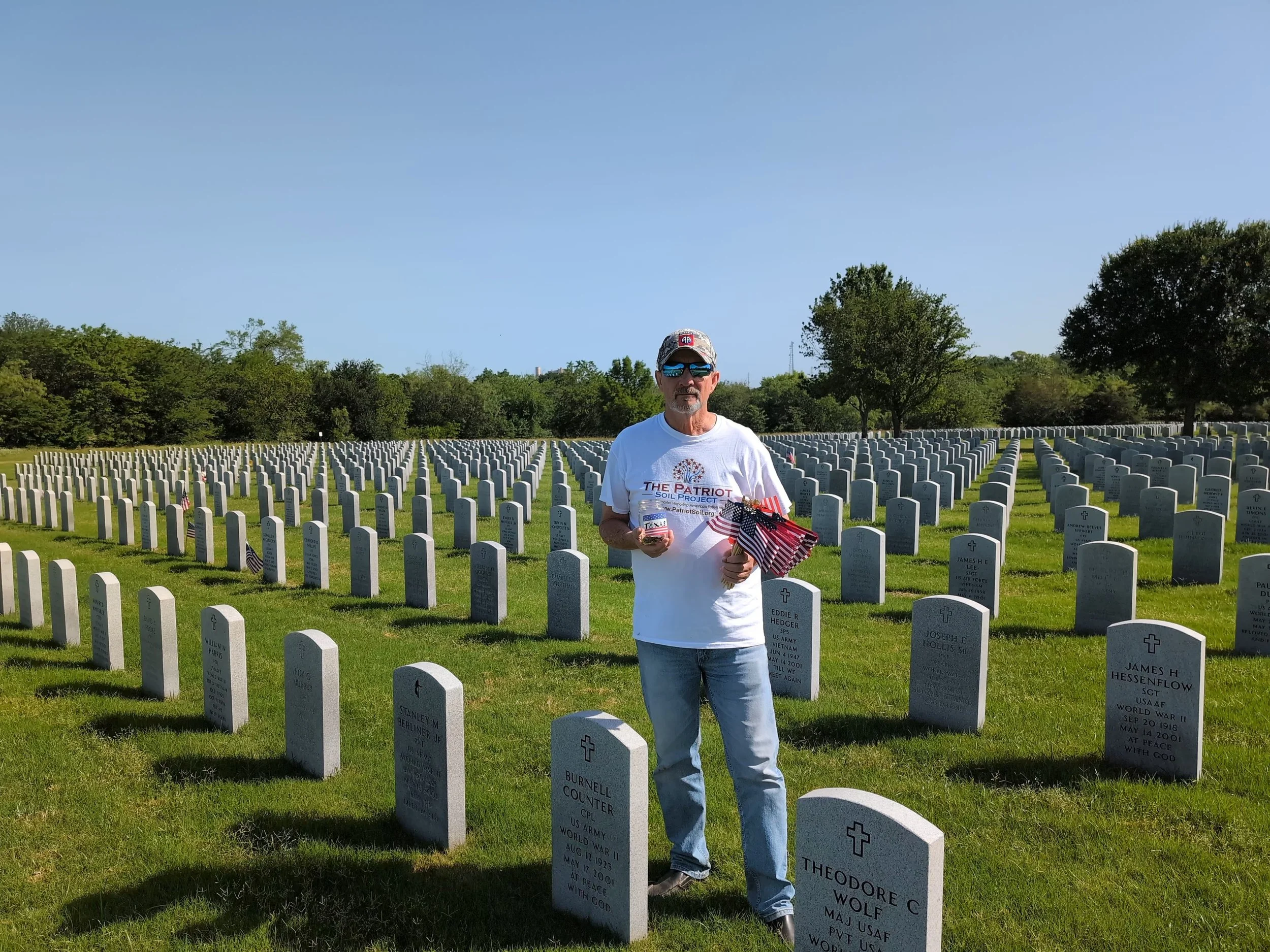
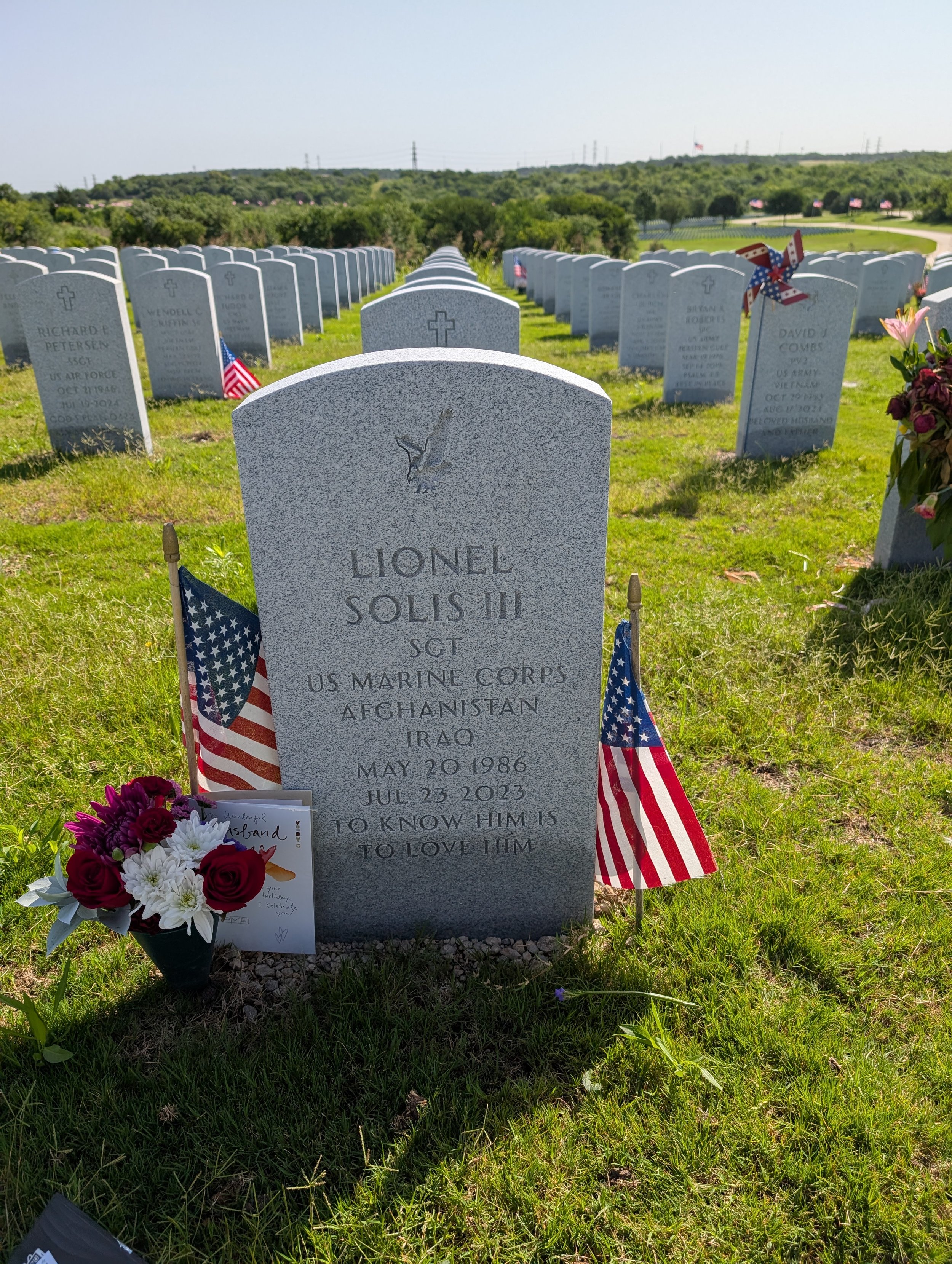
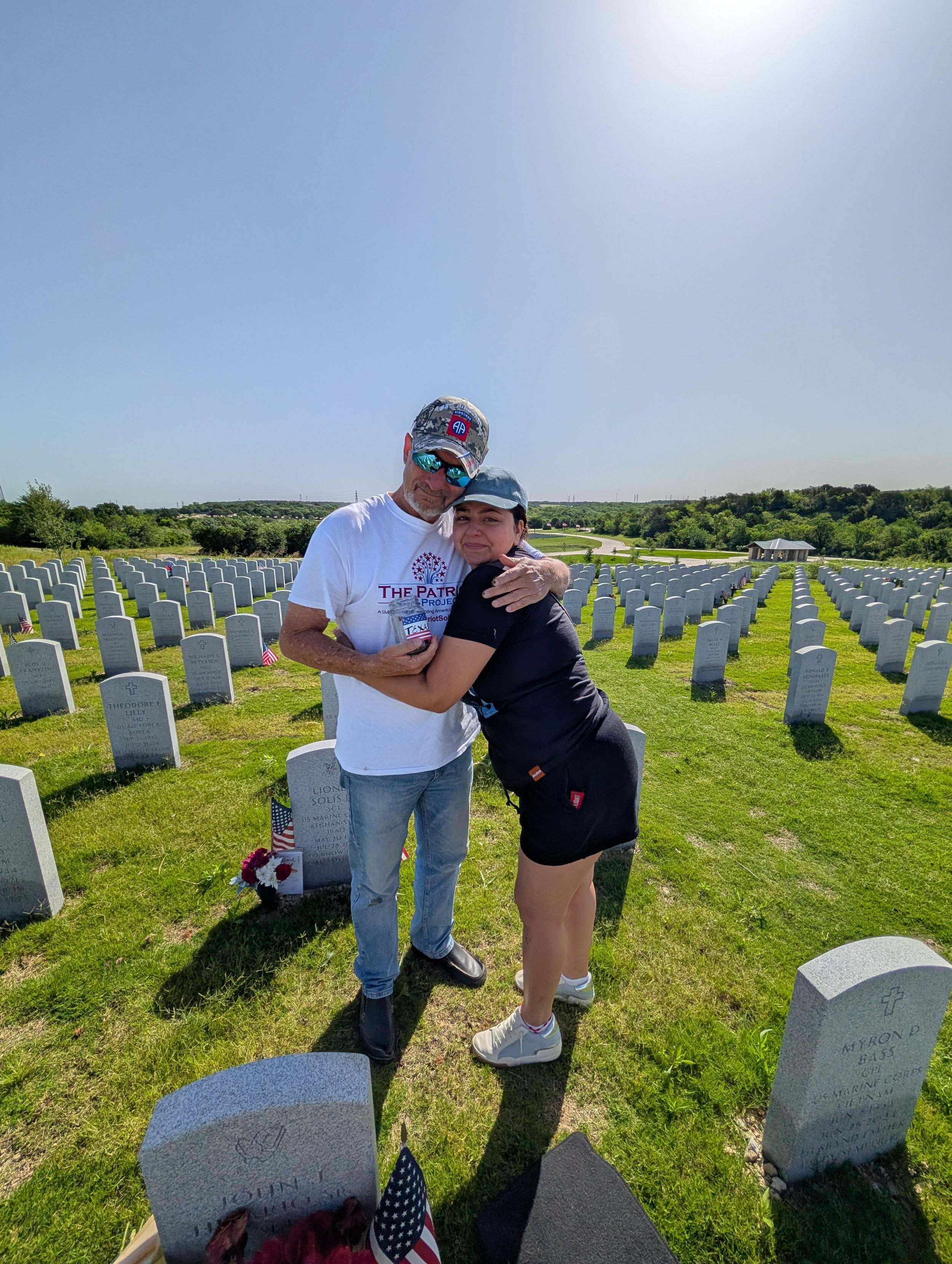
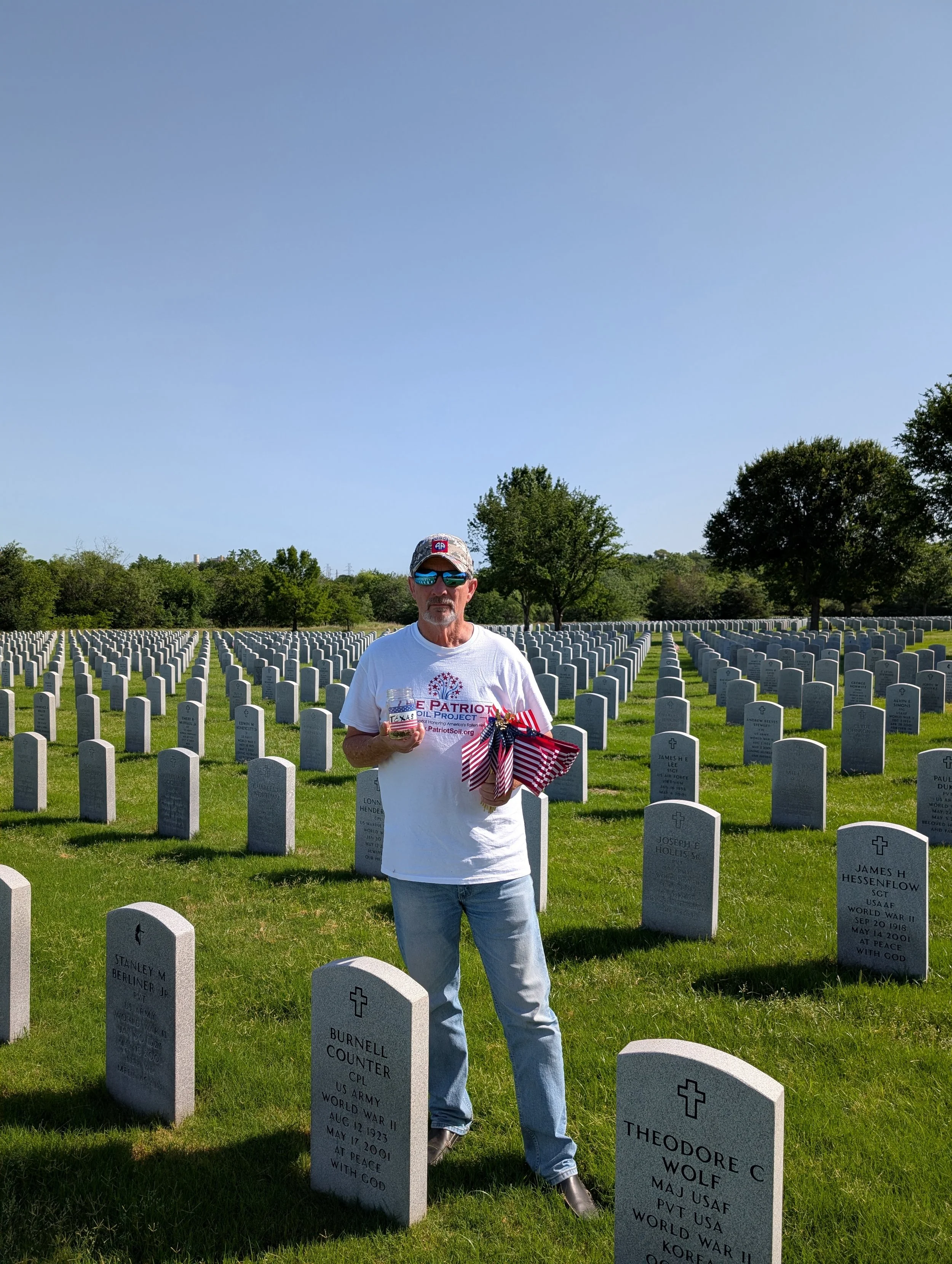
Salute of Honor
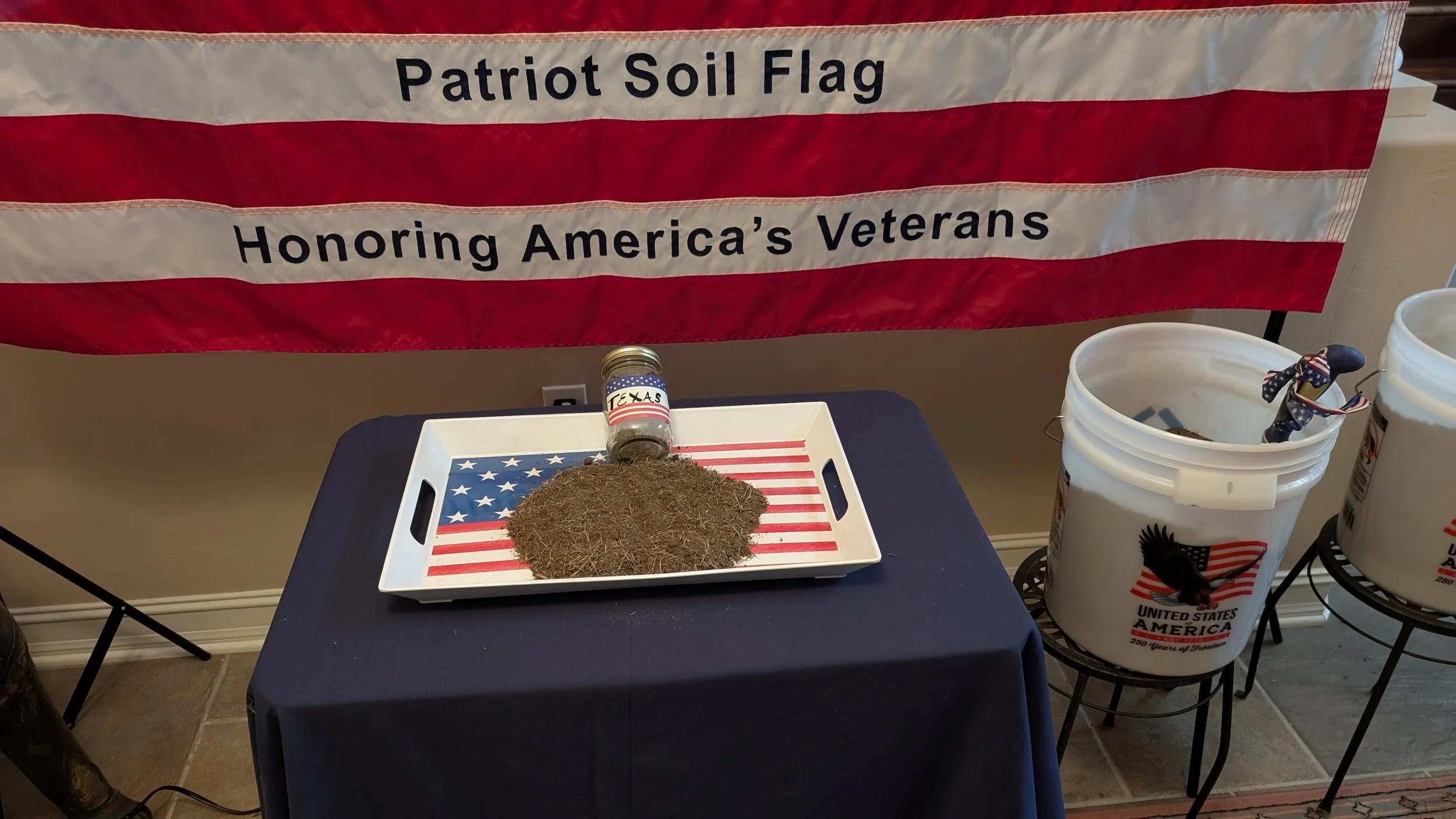
Soil MixingSoil collected from veteran resting places throughout the state is respectfully combined into a single blended collection, symbolizing the unity of all who served from that state.
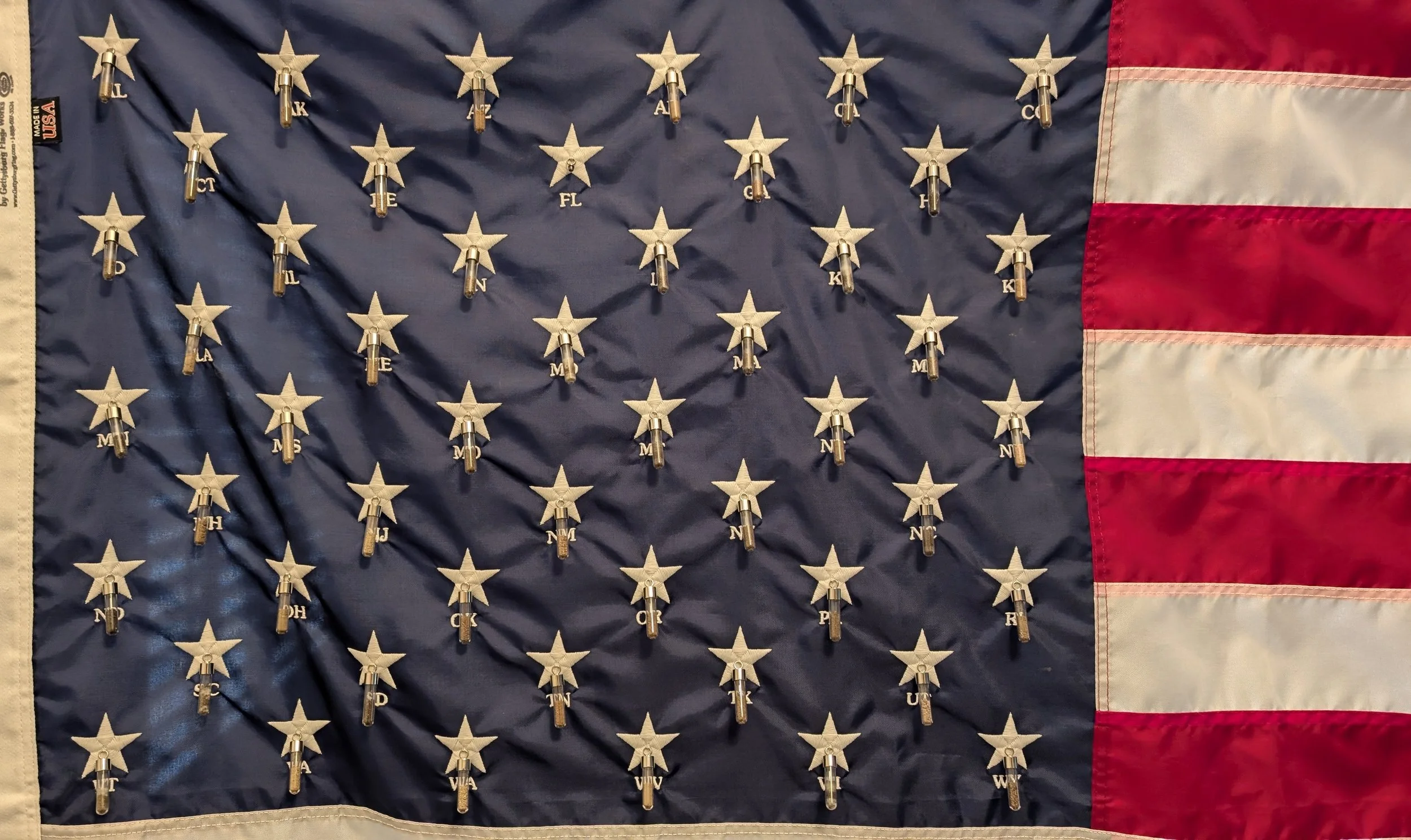
Vial & State StarSoil collected from veteran resting places throughout the state is respectfully combined into a single blended collection, symbolizing the unity of all who served from that state.