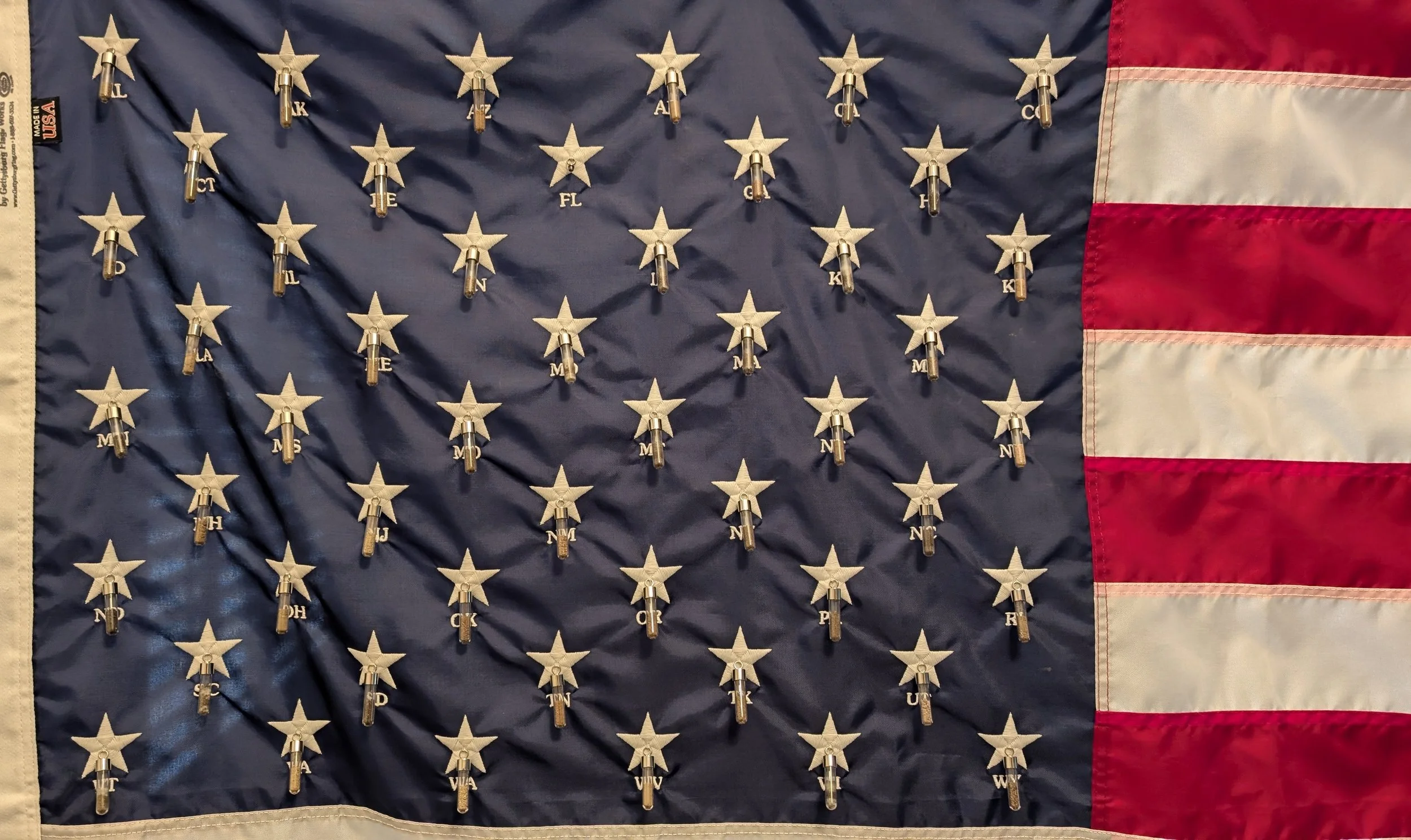
PENNSYLVANIA
Washington Crossing National Cemetery
Washington Crossing National Cemetery is a U.S. national cemetery in Bucks County, Pennsylvania, established in 2009 and managed by the United States Department of Veterans Affairs. It was created to provide additional burial space for veterans and their families in the Philadelphia region as older national cemeteries reached capacity.
The cemetery is designed in the traditional national style, with wide landscaped grounds, orderly rows of headstones, memorial walkways, and committal shelters for services. It offers both casket burials and cremation interments, including columbarium niches. As with all national cemeteries, eligible veterans, active-duty service members, and certain family members are buried here at no cost. Its proximity to the historic site of George Washington's crossing of the Delaware River adds symbolic significance.
The cemetery hosts ceremonies on Memorial Day and Veterans Day, honoring military service with formal remembrance events.
Notable burials include Tom Gola, Basketball Hall of Famer and NBA champion; Michael G. Fitzpatrick, former U.S. Congressman; Harold Johnson, world light heavyweight boxing champion; and George Benton, boxer and elite trainer. It also includes Mildred J. Dalton, a decorated WWII Army nurse, along with actress Sara Seegar and veteran James Moore, father of singer P!nk.
Overall, the cemetery serves both as a resting place for thousands of veterans and as a reflection of a wide range of American lives connected by military service and public contribution.


Erie Memorial Gardens
Erie Memorial Gardens in Erie, Pennsylvania is a large, modern lawn-style cemetery and memorial park located along Edinboro Road. It was established in the mid-20th century and has grown into one of the main burial grounds serving Erie County.
The cemetery is designed with landscaped grounds, flat memorial markers in many sections, and a more park-like layout compared to older traditional cemeteries. It offers a range of burial options including ground burials, mausoleum entombment, and cremation memorials.
It’s known locally for being well-maintained and easy to navigate, and it also includes a veterans’ section with memorial features, including a notable retired military aircraft display visible from nearby Interstate 90.
Overall, it functions as a community cemetery for Erie-area residents rather than a historic or celebrity burial site.


Mount Moriah Cemetery
Mount Moriah Cemetery is a historic rural cemetery located in Southwest Philadelphia and extending into Yeadon, Pennsylvania. Established in 1855, the cemetery was designed as a peaceful, landscaped burial ground and became one of the largest cemeteries in the Philadelphia region.
Spanning roughly 200 acres, Mount Moriah is the final resting place of an extraordinary range of people, including soldiers, sailors, civic leaders, community members, and families from many different backgrounds. Its grounds contain historic monuments, elaborate Victorian-era tombstones, military burial sections, mausoleums, and distinctive architectural features that reflect more than a century and a half of Philadelphia history.
The cemetery is particularly notable for its Civil War and military history. Dedicated burial areas contain the remains of soldiers who died in Philadelphia during the Civil War, as well as thousands of United States Navy personnel. Historic monuments throughout the grounds provide a tangible connection to the nation's military past.
Mount Moriah also has a connection to Betsy Ross, who was originally buried at the cemetery before her remains were relocated to a site near her historic home in Philadelphia.
After decades of declining maintenance, Mount Moriah was abandoned in 2011. Over time, portions of the cemetery became heavily overgrown, and many graves and monuments were hidden beneath vegetation. The cemetery's deterioration attracted renewed attention from preservationists, historians, genealogists, and members of the community.
Today, volunteers and preservation organizations are working to restore and protect Mount Moriah. Their efforts include clearing vegetation, maintaining the grounds, documenting graves, preserving historic monuments, and bringing greater public awareness to the cemetery's remarkable history.
Mount Moriah is more than a cemetery—it is a historic landscape that tells the story of Philadelphia, its communities, and the people who shaped the region. Its weathered monuments, wooded paths, military graves, and historic structures make it a unique place for exploring local history and remembering those who came before us.
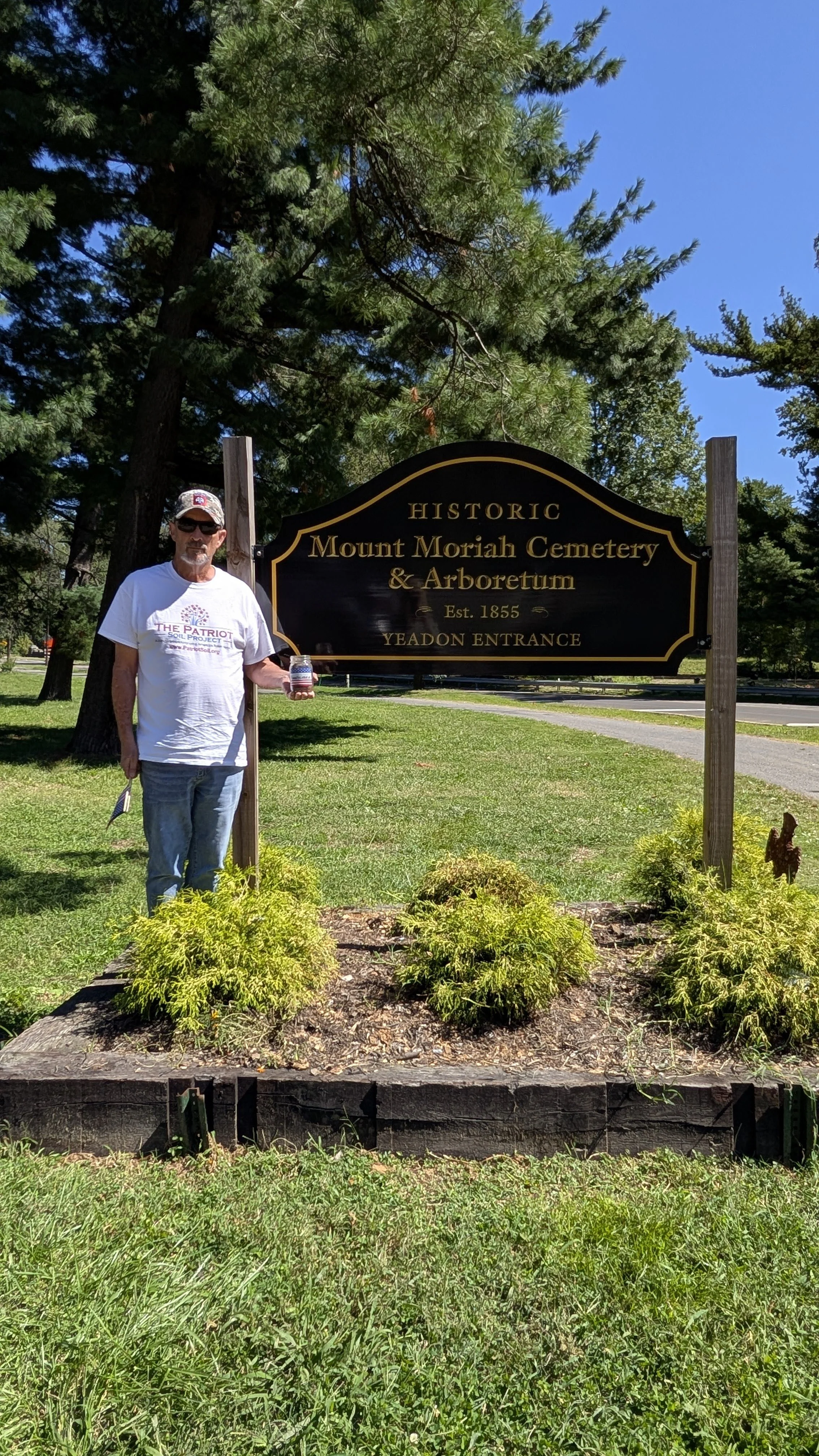
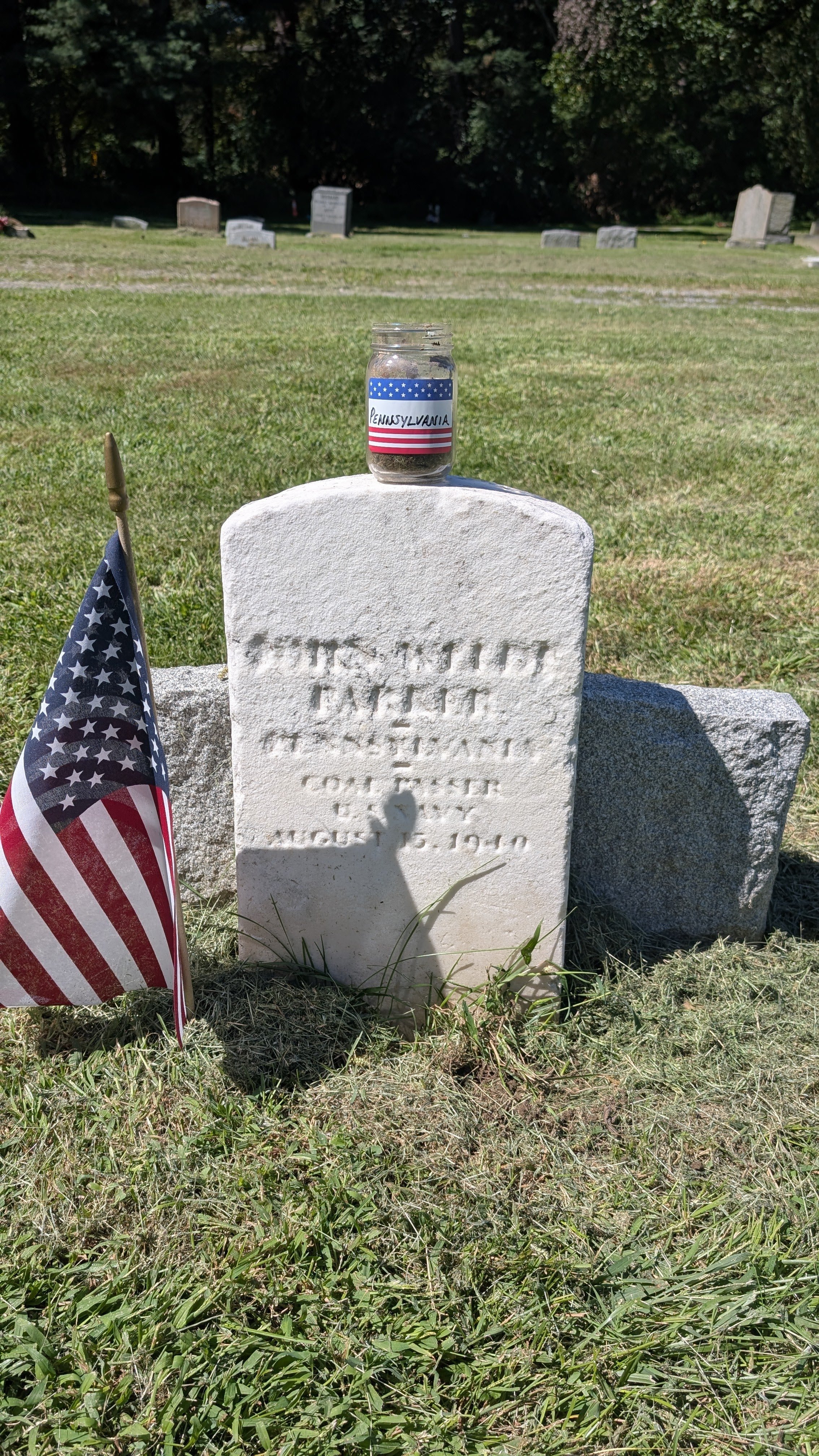
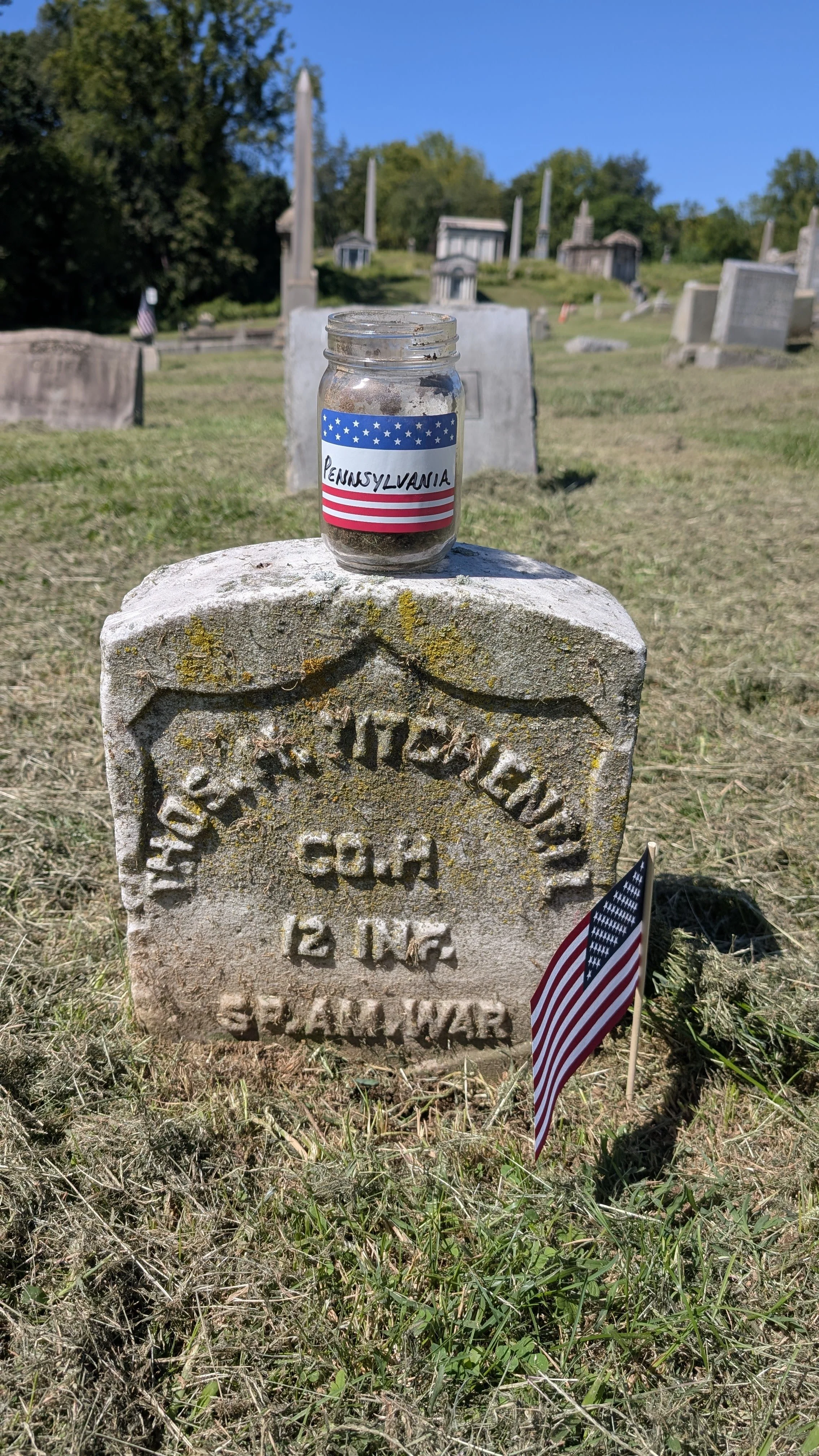
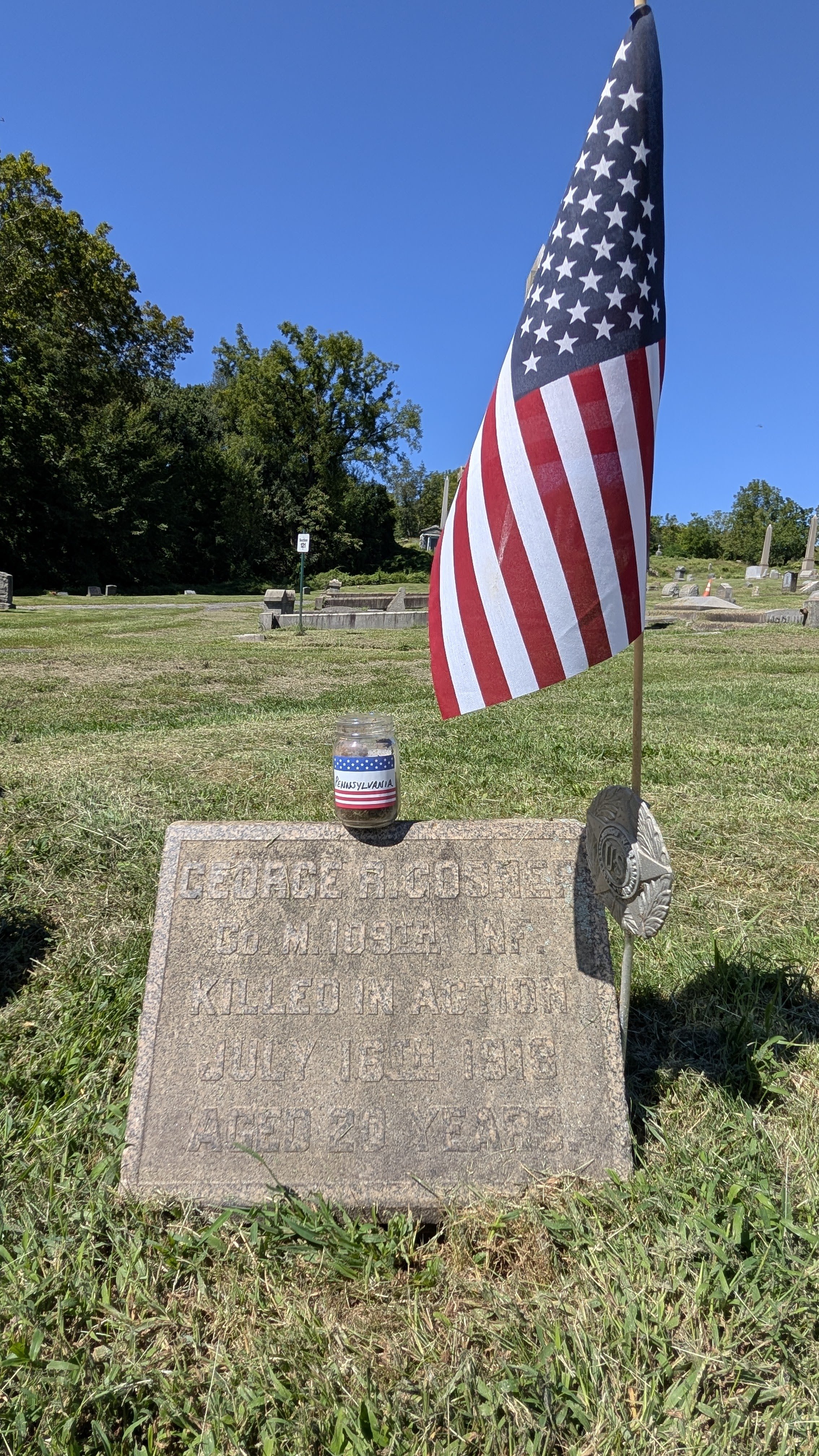
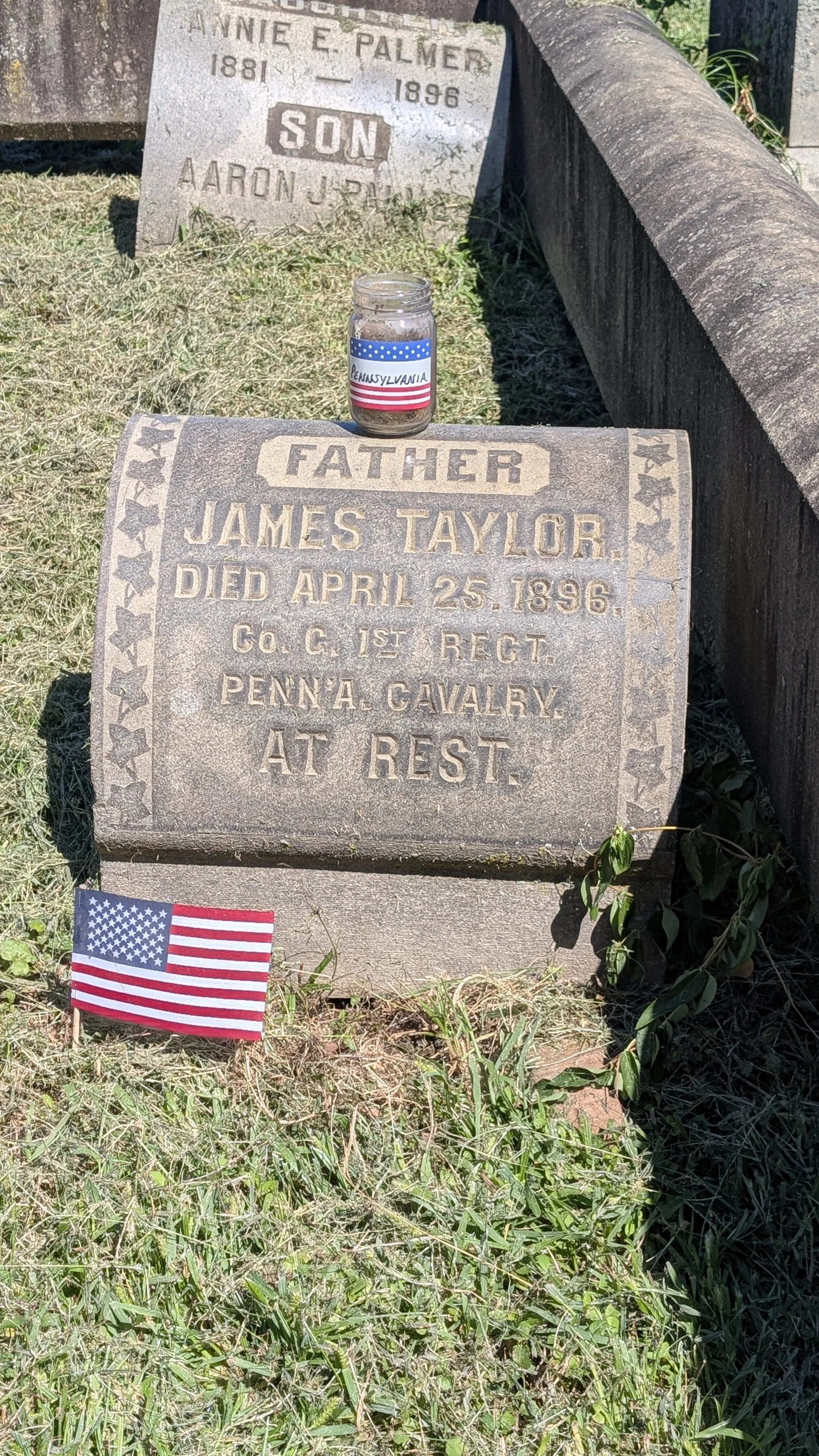
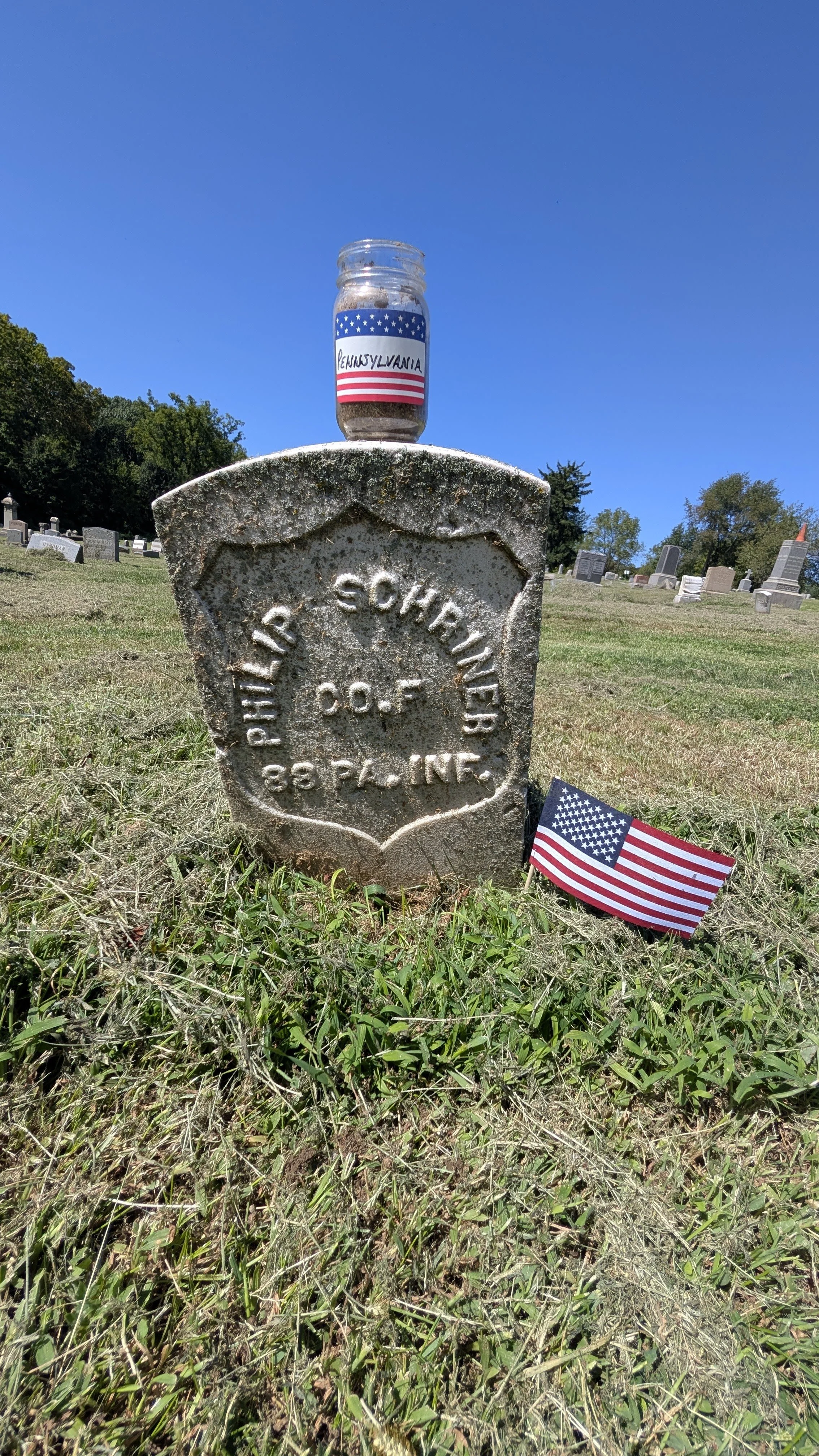
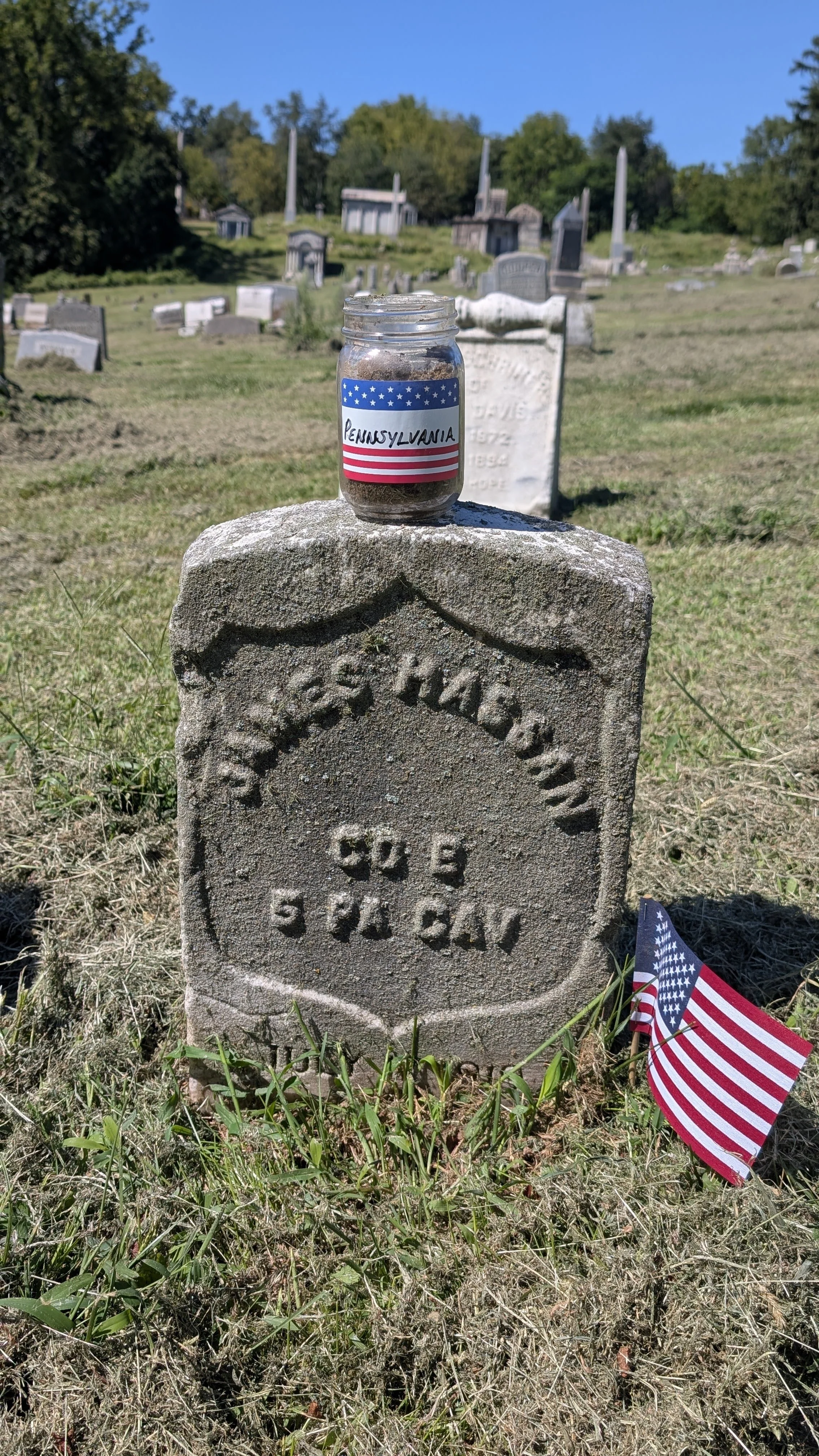
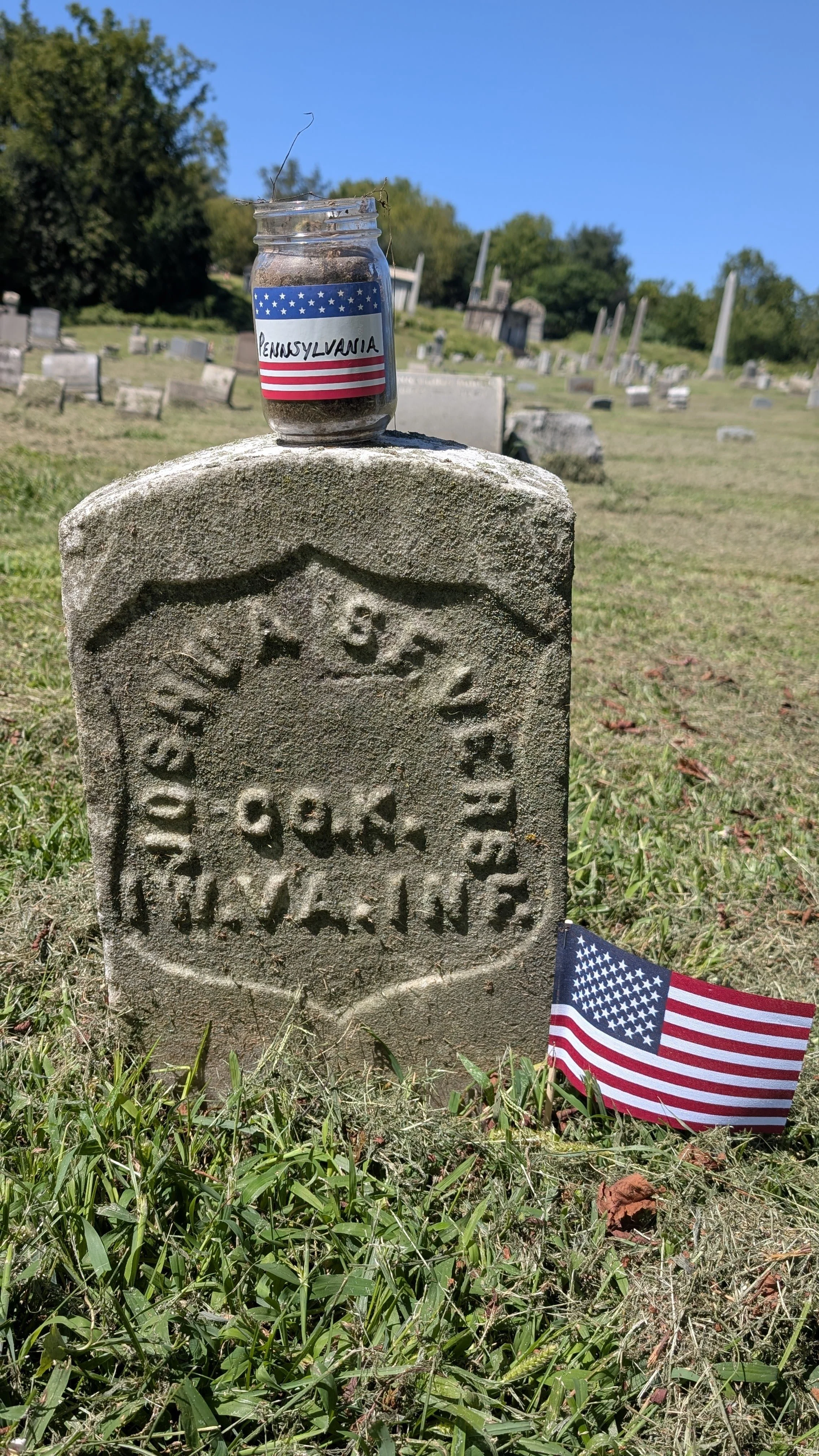
Soil MixingSoil collected from veteran resting places throughout the state is respectfully combined into a single blended collection, symbolizing the unity of all who served from that state.
Vial & State StarSoil collected from veteran resting places throughout the state is respectfully combined into a single blended collection, symbolizing the unity of all who served from that state.